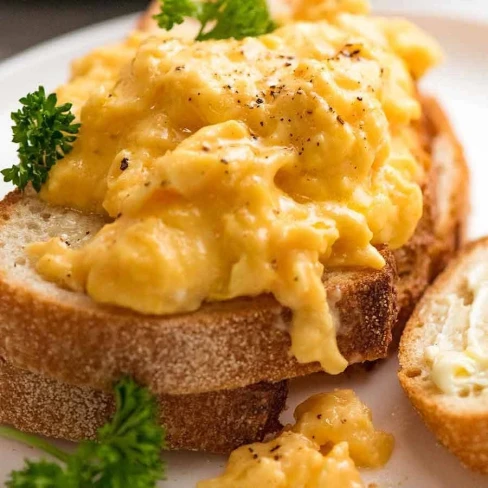
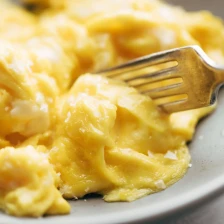
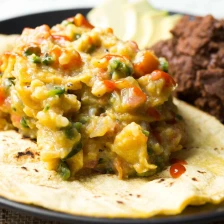
Scrambled eggs - soft and creamy, just as they should be!
Prep
1m
Cook
1m
Total
2m
This scrambled eggs recipe results in soft and creamy eggs, just as they should be. With a hint of milk, salt, and pepper, and served with toasted and buttered bread, it's a classic and delicious breakfast option.
Ingredients
2 servingsFor Serving
Steps
View steps on recipetineats.com or by saving the recipe to your
personal library.
Register for free to save this recipe.
Nutrition Facts
Per serving560 calories
Calories from
- Protein 19%
- Carbs 34%
- Fat 47%
-
Fat High 28 g 43%
-
Saturated Fat High 11 g 55%
-
Carbohydrates 45 g 15%
-
Fiber 3 g 12%
-
Sugar 6 g 12%
-
Protein High 25 g 50%
-
Cholesterol High 400 mg 133%
-
Sodium High 900 mg 37%
% Daily Value is based on a 2,000 calorie diet.
Notes
1. Milk - optional, makes the eggs a bit more creamy but you can still make wonderful scrambled eggs without.
Cream? Some people enjoy cream instead of milk - I find it unnecessarily rich but it's an option (same amount as milk - or halve).
Water? With older eggs (as some grocery eggs can be) are already watery and added water can exacerbate the wateriness. Milk works better, more consistently.
2. Homemade toastable bread options:
World's easiest crusty Artisan bread No yeast sandwich bread Irish soda bread(a no yeast bread)
3. TIPS:
Stove heat - use medium low if your stove is strong/hot. Use a smaller skillet if cooking less eggs. ~25cm/10" for 4 eggs, ~20cm/8" or less for 2 eggs. Non stick or well seasoned cast iron skillet highly recommended for ease - eggs are the ultimate food glue. Scrambled eggs should not be browned or crispy at all, it should be yellow and creamy all the way through. DO NOT viciously stir around in circles, or zig zag frantically back and forth! This will create rough, "chopped up" dried scrambled eggs, rather than soft and creamy. Use gentle, leisurely strokes. Use pushing / folding / turning motions with the rubber spatula so you get soft, creamy scrambled egg curds, rather than a raggedy chopped up dry pile of scrambled eggs.
4. Nutrition per serving (2 eggs, 1/2 tbsp butter), excludes bread.
More Like This
Comments
Sign in to leave a comment.